CPA Network Payment Terms: Net-30, Thresholds & Holds
This page contains affiliate links. If you buy through them we may earn a commission at no extra cost to you — it never changes our verdict. How we make money.
A profitable balance in a network dashboard means nothing if you run out of working capital before the money reaches your bank account. For anyone buying traffic, CPA network payment terms are not an administrative detail: the payment schedule, more than the payout per lead, decides whether a campaign that works on paper can keep running.
When do CPA networks pay affiliates? CPA networks pay on a fixed schedule such as Net-30, Net-15 or weekly, counted from the end of an earning period rather than from the day of the conversion. Payment is released only once your approved balance clears the network’s minimum threshold and any identity, tax-form or traffic-quality checks are complete.
How CPA Network Payment Terms Work: Net-30, Net-15 and Weekly
Beginners tend to compare networks on payout per lead alone. The question of when a CPA network actually pays matters just as much. A payment term combines two things: the earning period (the window in which conversions accrue, usually a calendar month and sometimes a week) and the delay after that period closes before the money is sent.
Net-30 Payment Terms
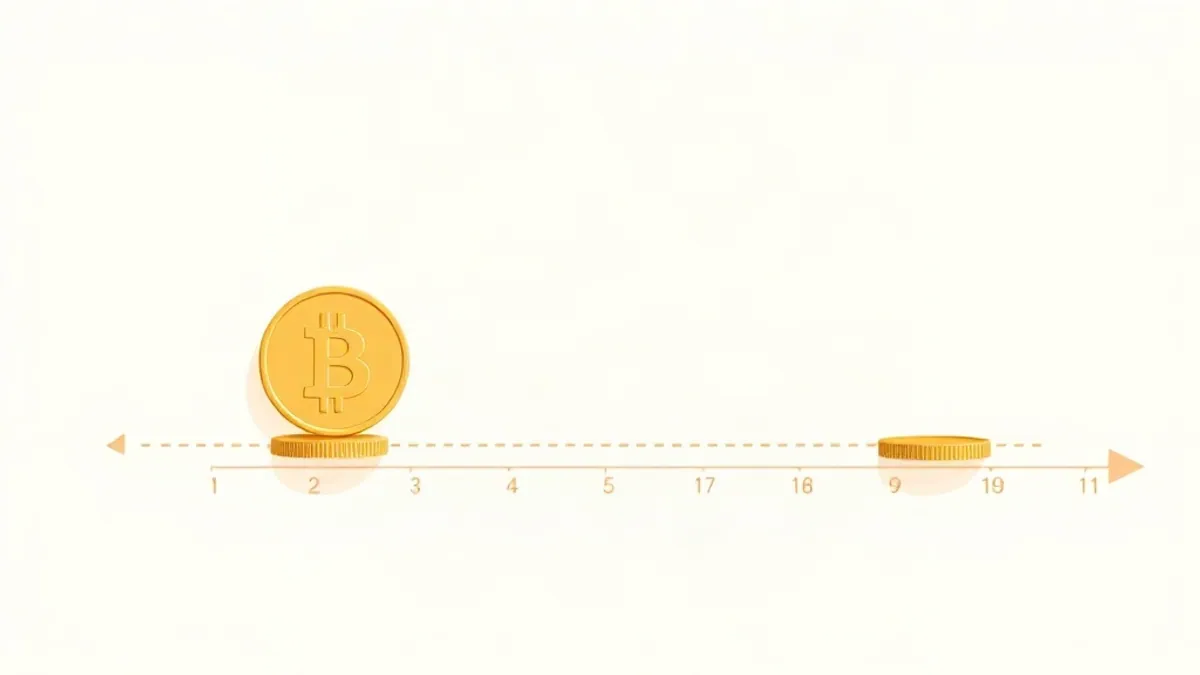
Under a monthly Net-30 schedule, earnings are totalled over a calendar month, for example 1 January to 31 January. “Net-30” means the network pays that total about 30 days after the period closes, so around the start of March.
That creates a long lag. A lead generated on 1 January under Net-30 affiliate payments takes roughly two months to turn into cash. A lead generated on 31 January takes about one. If you are paying for traffic, you have to fund that whole stretch yourself.
Net-15 and Bi-Weekly Payment Terms
Net-15 shortens the delay after the period closes: January earnings are paid around mid-February. Some networks also split the month into two earning periods, for example the 1st to the 15th and the 16th to month end, each paid a couple of weeks after it closes. Either way, the longest wait drops from about two months to about six weeks or less.
Weekly Payment Terms
A network that pays weekly usually runs a seven-day earning period and pays some days after it closes, which you will see written as Net-7 or similar. Conversions from one week are typically paid during the following week or the one after. That short turnaround is why weekly terms are so sought after by media buyers.
Daily and On-Request Payouts
A smaller number of networks offer daily or on-request payment of approved commission. These terms are attractive for scaling paid campaigns, but they are rarely available to new accounts, because the network carries the reversal risk if it pays before the advertiser has validated the leads.
The CPA Network Minimum Payout Threshold
Alongside the schedule, every network sets a minimum payout: the approved balance your account must reach before a payment is issued at all.
If your approved earnings at the end of a cycle fall below the threshold, the money is not lost. The balance rolls over to the next period. As a purely illustrative example, if a network required a $100 minimum and your approved balance at the end of the month were $65, nothing would be paid that cycle, and you would need a further $35 of approved commission before the next payment run.
Networks set thresholds mainly to control transaction costs. Sending thousands of very small payments generates bank and processor fees out of proportion to the amounts involved.
Thresholds, available schedules and fees differ by network, by payment method and sometimes by account, and they change. This article deliberately does not quote any specific network’s current figures. Check the payment page and terms of the network you actually join before you send traffic.
Why CPA Networks Pay on a Delay
To an affiliate waiting for funds, Net-30 can feel punitive. It follows from how money moves through the chain.
A CPA network is an intermediary. The advertiser pays the network, and the network pays you. Advertisers do not pay for each lead as it arrives. They take a validation window to review the leads, check for duplicates and monitor for fraud, and only then settle with the network.
During that window, invalid conversions are deducted:
- Lead reversals: invalid contact details, disposable email addresses or unconfirmed sign-ups that the advertiser rejects.
- Chargebacks: card payments on trial offers that are later disputed or turn out to be fraudulent.
- Compliance breaches: conversions generated by a traffic method the offer forbids, such as incentivised traffic or brand bidding where those are not allowed.
If a network paid affiliates immediately and the advertiser later rejected a share of those leads, the network would carry the loss. The delay is the buffer in which reversals are settled before the money leaves the network.
Pending, Approved and Paid: Reading the Dashboard
A network dashboard usually separates your earnings into stages. The labels vary, but the logic is consistent:
- Pending commission: conversions that have been recorded but not yet validated by the advertiser. Pending commission can still be reversed and cannot be paid out.
- Approved (or payable) commission: conversions that have passed validation. This is the balance that counts toward the minimum payout threshold.
- Paid commission: money that has actually been sent to you by your chosen payment method. Some dashboards show an intermediate “processing” state between approved and paid.
Only the approved figure tells you anything about cash you can plan around. If you want to understand how conversions are recorded in the first place, see our guide to CPA tracking and postback URLs.
Payment Holds Beginners Run Into
Even with an approved balance above the threshold, a first payment is often delayed by checks the network runs before it releases money to a new account.
Identity and Tax Forms
Networks that pay from the United States generally ask for a tax form before the first payout: a Form W-9 from US persons, and a Form W-8BEN (individuals) or W-8BEN-E (entities) from affiliates based elsewhere. Many networks also ask for identity documents, such as government-issued photo ID or proof of address. If the form is missing, the payment simply waits, so it is worth completing when you join rather than when you first reach the threshold.
This describes a common onboarding step in general terms. It is not tax advice, and your own obligations depend on where you live.
First-Payment Review and Traffic Checks
Many networks review an account before its first payout. This gives the compliance team, and the advertiser, time to look at the quality of the traffic you sent. Typical signals include conversion rates that look implausible for the traffic type, a narrow spread of IP addresses or devices, referrers that do not match the traffic source you declared, and direct feedback from the advertiser on lead quality.
If the traffic passes, payments continue on the normal schedule. If the network finds a forbidden promotional method, it can reverse the affected commission, withhold payment while it investigates, or close the account. An application that describes your traffic accurately makes this review much less eventful, which is one more reason to follow our guide on how to get approved by a CPA network rather than overstating what you do.
Payment Methods, Fees and Currency Conversion
What reaches your account also depends on how you are paid. Commonly offered methods include:
- Bank transfer or direct deposit: the usual low-cost option where the network supports your country.
- Wire transfer: practical for larger payments, but the sending and receiving banks may each charge a fee, which makes wires poor value for small amounts.
- PayPal: widely available and convenient, though receiving fees and currency conversion margins can apply.
- Payoneer and similar services: often used by affiliates outside the United States, with their own fee schedules.
- Cheque: still offered by some networks, and the slowest option.
If your ad spend is in one currency and your network pays in another, conversion margins reduce your real profit. These costs differ by provider and change over time, so check the current fee schedule of both the network and the payment service before you choose a method.
The Cash-Flow Gap: Why a Profitable Campaign Can Still Run Dry
The gap between when you pay for clicks and when you are paid for conversions is the central problem of paid CPA marketing.
On ad platforms you usually prepay or are charged within days, as Google’s own overview of payment methods for Google Ads explains for that platform. Your CPA network, meanwhile, may pay weeks after the earning period closes. The uncomfortable consequence is that scaling a profitable campaign widens the gap rather than closing it.
A Hypothetical Illustration
The numbers below are invented round figures chosen to make the arithmetic easy. They are not a benchmark and not a forecast.
- Ad spend: $100 per day, paid as you go.
- Approved commission: $150 per day.
- Paper profit: $50 per day.
- Payment terms: monthly Net-30.
Here is how the working capital requirement unfolds:
- Month 1: you spend $3,000 on traffic. The dashboard shows $4,500 earned. You receive nothing from the network yet, so the full $3,000 comes out of your own funds.
- Month 2: you keep spending at the same rate, another $3,000. At around the end of Month 2 the network pays the $4,500 from Month 1.
- Position at that point: you have paid out $6,000 and received $4,500. Just before that first payment arrived, you were $6,000 out of pocket on a campaign that was profitable every single day.
Now suppose the campaign looks so good that on day 15 you raise spend from $100 to $500 per day, and assume, optimistically, that the return holds:
- Spend for the second half of Month 1 is $7,500, so the month totals $9,000.
- The dashboard shows $13,500 earned.
- The network still pays nothing until around the end of Month 2, by which time you have funded a second month at the higher rate as well.
Without the cash to cover that, the campaign stops when your card or prepaid balance runs out, not because it lost money but because the money arrived too late. In practice returns also tend to fall as spend rises, which makes the squeeze worse, not better.
For how each traffic channel bills and what it demands, read our guide to our comparison of native, push and pop.
How Affiliates Legitimately Shorten the Gap
There is no trick that removes the gap. There are three honest ways to make it smaller.
1. Start Where the Terms Are Shorter
Payment schedule is a legitimate criterion for choosing a network or an offer, alongside the offers themselves. Some networks pay weekly from the start, and self-serve incentive networks often have low thresholds, usually in exchange for lower payouts. Our comparison of our guide to getting network approval covers how to weigh those trade-offs.
2. Ask for Faster Terms Once You Have a Clean History
Payment terms are often negotiable for established accounts. After several payment cycles of consistent volume and clean lead quality, ask your affiliate manager whether faster terms are available. Explain plainly that a shorter cycle lets you reinvest sooner. This is granted at the network’s discretion and is never guaranteed, so do not build a budget that depends on it.
3. Keep Spend Inside What Your Float Can Cover
Work out the longest stretch between paying for a click and being paid for its conversion under your actual terms, and keep daily spend at a level you can sustain for that whole stretch with nothing coming in. Under monthly Net-30 that stretch is roughly two months. Scale only as fast as received payments, not dashboard balances, allow.
One thing software does not change is the schedule itself. CommissionOS, for example, is described by its vendor as a page, content and campaign-planning tool, and nothing in its materials suggests it affects when a network pays you. Our full CommissionOS review covers what it does and does not do.
Comparing CPA Network Payment Schedules
The table describes the common schedules qualitatively. Who qualifies for which is each network’s decision.
| Schedule | How long you wait | Who typically gets it | What it means for cash flow |
|---|---|---|---|
| Monthly Net-30 | From about one month to about two, depending on when in the month the lead was generated | Common default for new accounts | Heavy: you fund up to roughly two months of spend before the first payment |
| Bi-weekly or Net-15 | A few weeks | Accounts with some consistent history, or networks that offer it as standard | Moderate: manageable with a modest reserve |
| Weekly | Days to a couple of weeks | Networks that offer it as standard, or established affiliates with clean traffic | Light: allows frequent reinvestment |
| Daily or on request | Shortly after commission is approved | Usually high-volume, long-standing accounts | Minimal, though approval of the commission itself can still take time |
What to Read in a Network’s Terms Before Sending Traffic
Before you spend anything on ads, find the answers to these in the network’s terms and payment documentation, and ask your affiliate manager about anything that is unclear:
- Default schedule: which payment term does a new account start on?
- Minimum threshold: what approved balance triggers a payment, and does it differ by payment method?
- Fees: does the network pass transfer or processing fees on to the affiliate?
- Forms and identity checks: what must be submitted before the first payout, and can you submit it now?
- Offer-level holds: does the specific offer carry its own validation period before commission is approved?
- Reversal policy: under what conditions can approved commission be reversed, and what happens to payment while traffic is under review?
- Non-payment by the advertiser: does the network pay you if the advertiser does not pay the network?
Who This Route Does Not Suit
Payment schedules make one thing clear: buying traffic for CPA offers is a capital-intensive way to work. It does not suit anyone who:
- Would be funding ad spend with money they need back within weeks, such as rent or living costs.
- Plans to fund it with borrowed money. Debt has a fixed repayment date, and a network payment that is held or reduced does not.
- Needs income to arrive on a predictable day.
- Could not absorb a reversed month, a failed test or a delayed payment without hardship.
If your starting capital is limited, running paid traffic on monthly Net-30 terms is a serious financial risk. Organic traffic costs time instead of money and has no gap to fund, and networks with low thresholds and weekly terms reduce the exposure while you build a reserve.
The Short Version
Read the payment terms before you read the payout. Know the schedule, the threshold and the holds, plan around approved commission rather than pending, and size your ad spend to the time it really takes for money to come back. A campaign that cannot survive its own payment cycle is not yet a profitable campaign.
Related guides

Best CPA Networks in 2026: How to Choose and Get Approved
Compare the best CPA networks in 2026, discover high-converting offer verticals, and learn the exact step-by-step process to pass network approval calls.

Paid Traffic for CPA Offers: Google, Native, Push and Pop
An honest breakdown of paid traffic for CPA offers covering Google Ads, native, push, pop, and social networks, with test budgets and policy guidance.

How to Get Approved by CPA Networks: A Practical Guide
Learn how to pass CPA network sign up requirements and the affiliate manager interview. Get accepted into top networks without lying or getting rejected.